Sticky Beef Noodles
Introduction
Have you ever wondered why the best sticky beef noodles cling to your fork and linger on the palate longer than ordinary stir-fries — and what small technique could turn a good weeknight meal into a restaurant-quality craving? Data-driven food trends show rising interest in saucy, texturally layered noodle dishes because they combine umami density, quick cooking, and high comfort value; sticky beef noodles deliver all three when you balance caramelization, glaze viscosity, and noodle surface texture. This recipe challenges the myth that deeply flavored beef noodle dishes must take hours — with targeted searing and a glossy cornstarch-based glaze, you can build complexity in under an hour while keeping the dish sticky, savory, and supremely satisfying.
Ingredients List
- 12 oz (340 g) fresh or dried egg noodles (substitute: rice noodles for gluten-free or udon for chewier texture). Choose slightly porous noodles for better sauce cling.
- 1 lb (450 g) flank steak or skirt steak, thinly sliced across the grain (substitute: thinly sliced beef chuck for richer flavor; use tofu or seitan for vegetarian).
- 2 tbsp neutral oil (canola, grapeseed) for high-heat searing (substitute: avocado oil).
- 4 cloves garlic, minced — gives aromatic depth and quick browning.
- 1 tbsp fresh ginger, minced — cuts through richness.
- 1 medium yellow onion, thinly sliced — caramelizes to build sweetness.
- 3 scallions, sliced on bias (reserve white and green parts separately).
- 3 tbsp soy sauce (use low-sodium to control salt; coconut aminos for soy-free).
- 2 tbsp oyster sauce (substitute: hoisin for sweeter profile; mushroom oyster sauce for vegan).
- 2 tbsp dark soy or 1 tbsp molasses + 1 tbsp light soy to deepen color (optional but boosts stickiness and umami).
- 1 tbsp rice vinegar or black vinegar — adds balance and brightness.
- 1½ tbsp brown sugar or honey — feeds caramelization; for lower sugar, use a sugar substitute like erythritol in small amounts.
- 1 tbsp cornstarch + 3 tbsp water slurry — creates the glossy, sticky glaze.
- 1 tsp toasted sesame oil — finishing flavor.
- 1 tsp chili crisp or Sriracha (optional) — for heat layer.
- Fresh cilantro or basil and sesame seeds for garnish (optional).
Timing
Prep time: 15 minutes. Active cook time: 20–25 minutes. Total time: ~35–40 minutes — significantly faster than traditional slow-braised beef noodle dishes that often take 2–3 hours, making this version ideal for weeknights when you want bold flavor without long waits. If using dried noodles that require extended boiling, add 5–8 minutes to total time.
Step 1 — Prep and marinade (5–10 minutes)
Slice the beef thinly across the grain to keep each bite tender; toss with 1 tsp soy sauce, 1 tsp cornstarch, and a pinch of baking soda if you want a velveted texture (baking soda speeds tenderization — use sparingly). This quick marinade helps the meat brown evenly and creates an initial umami boost. Tip: freeze the steak for 20 minutes before slicing to make thin, uniform pieces easier to cut.
Step 2 — Cook the noodles (5–8 minutes)
Bring salted water to a rolling boil and cook noodles until just shy of al dente — aim for 90% cooked because they'll finish in the sauce. Drain and toss with a small drizzle of oil to prevent sticking. If using fresh noodles, they may only need 60–90 seconds; watch closely. Personalized tip: reserve ¼ cup of noodle cooking water to loosen the glaze if it becomes too thick — starch helps sauce adhere and feel silky.
Step 3 — Sear the beef (3–5 minutes)
Heat a wok or large skillet until smoking, add neutral oil, then sear beef in a single layer without overcrowding; work in batches for best caramelization. Sear until edges crisp and centers are medium-rare to medium depending on preference. Remove and rest on a plate. Actionable trick: high heat creates Maillard flavors that make the final glaze taste deeper even when cooked quickly.
Step 4 — Build the sauce and aromatics (3–4 minutes)
Lower heat slightly and add a touch more oil if needed. Sauté white parts of scallions, garlic, ginger, and onions until translucent and fragrant. Stir in soy sauce, oyster sauce, dark soy or molasses, rice vinegar, and brown sugar. Bring to a simmer to dissolve sugar and let flavors meld. Tip: taste for balance — you want salty, sweet, acidic, and umami in harmony; adjust one ingredient at a time.
Step 5 — Create the sticky glaze (2 minutes)
Whisk cornstarch with cold water to make a slurry and stream it into the simmering sauce while stirring. The sauce will thicken and turn glossy quickly. Add reserved noodle water a tablespoon at a time if the sauce tightens too much; the goal is a clingy, not gloopy, consistency. Add the seared beef back in and toss to coat, allowing residual heat to finish cooking the meat without drying it.
Step 6 — Combine and finish (1–2 minutes)
Add drained noodles directly to the pan and use tongs to fold everything together, ensuring each strand is coated. Finish with sesame oil, chopped scallion greens, chili if using, and a sprinkle of sesame seeds. Personalized serving tip: toss in a handful of blanched bok choy or baby spinach at the end for color, crunch contrast, and a nutrient boost.
Nutritional Information
Per serving (recipe yields 4 servings) — approximate values: Calories 650–750; Protein 32–40 g; Carbohydrates 70–90 g; Fat 22–30 g; Fiber 3–5 g; Sodium 900–1400 mg (depends on soy/oyster sauce choices). Data insight: swapping low-sodium soy sauce can reduce sodium by up to 30–40%, and choosing leaner cuts of beef lowers total fat by 20–30% while maintaining protein content. If you substitute tofu and oyster sauce with mushroom-based alternatives, calories may drop by ~25% and saturated fat will reduce significantly.
Healthier Alternatives for the Recipe
- Swap egg noodles for whole-grain or soba noodles to increase fiber and micronutrients. Whole-grain noodles can raise fiber by 50–100% per serving.
- Replace half the beef with sliced king oyster mushrooms or tempeh to cut saturated fat while adding umami and texture.
- Use low-sodium soy sauce and replace brown sugar with a smaller amount of maple syrup or monk fruit to reduce added sugars.
- For paleo or keto variations, serve the sticky beef over spiralized zucchini or konjac noodles; reduce cornstarch and thicken the sauce with xanthan gum sparingly.
Serving Suggestions
Serve sticky beef noodles straight from the wok with a crisp vegetable on the side — pickled cucumbers, quick kimchi, or steamed broccolini provide contrast. For a restaurant-style presentation, garnish with microgreens, toasted sesame seeds, and a citrus wedge to brighten the dish. Personalized pairing: pour a light-bodied red (Pinot Noir) to complement beef umami, or choose a cold, slightly sweet Riesling to play off the glaze’s caramel notes. For a family-style dinner, add a communal platter of steamed greens and let guests customize heat with chili oil.
Common Mistakes to Avoid
- Overcrowding the pan during searing: this causes steaming, not browning. Work in batches and maintain high heat.
- Adding cornstarch slurry too early: if the sauce isn’t simmering, the slurry won’t activate and may taste raw.
- Overcooking noodles: they should be slightly undercooked before finishing in the sauce to prevent mushiness.
- Skimping on acid: without vinegar or a bright element, the glaze can taste cloying. Balance is key.
- Using low-quality soy/oyster sauces: flavor concentrates in the glaze; a better sauce gives more depth with less added sugar or salt.
Storing Tips for the Recipe
Store leftovers in an airtight container in the refrigerator for up to 3 days. Reheat gently in a skillet over medium-low heat with a splash of water or broth to loosen the sauce and prevent drying; microwave reheating tends to toughen the beef. For make-ahead prep, slice beef and mix the sauce components (without cornstarch) and store separately; combine and finish with the slurry just before serving for optimal texture. Freeze cooked noodles and beef only if necessary — thaw overnight in the fridge and reheat gently to preserve noodle texture.
Conclusion
Sticky beef noodles are a high-impact, quick-to-execute dish that combines caramelized beef, glossy umami glaze, and noodles that hold flavor in every bite. By using targeted searing techniques, an effective cornstarch slurry, and mindful balancing of sweet, salty, and acidic elements, you can achieve a restaurant-quality result in under an hour. Try the recipe, tweak the heat or noodle type to your preferences, and share your version or questions in the comments — I’ll respond with tweaks to match your dietary needs or flavor goals.
FAQs
Q: Can I make this gluten-free? A: Yes — use rice noodles and coconut aminos or a certified gluten-free tamari instead of soy/oyster sauces; consider mushroom-based vegan oyster sauce alternatives. Q: How do I keep the beef tender? A: Slice against the grain and either marinate briefly with cornstarch (velveting) or use quick, high-heat searing so the interior stays juicy. Q: Can I prepare any of this ahead? A: Yes — slice the beef and mix the non-starch sauce components ahead; par-cook noodles and store separately. Add the cornstarch slurry and finish together just before serving. Q: My sauce went gummy — how to fix it? A: Whisk in a little hot water or reserved noodle cooking water over heat to loosen; add a splash of vinegar to rebalance if sweetness intensified. Q: What noodles cling best to the sauce? A: Slightly porous egg noodles or fresh alkaline noodles hold glaze well; rice noodles and udon can work but require adjustments to sauce viscosity.
Sticky Beef Noodles
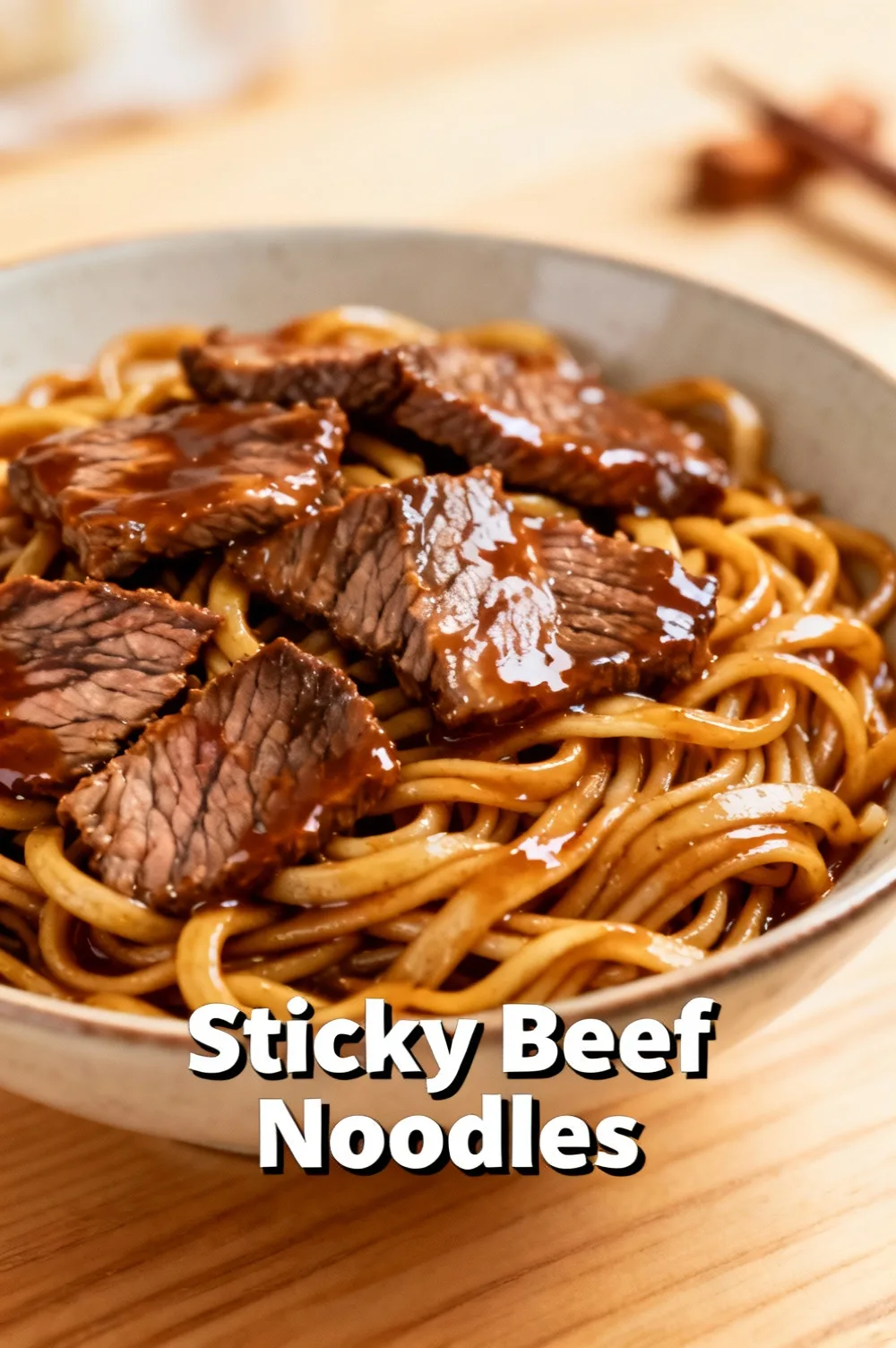
Tender slices of beef tossed with springy noodles in a glossy, sticky sweet‑savory sauce.
Ingredients
- 1 lb (450 g) flank steak or sirloin, thinly sliced against the grain
- 8 oz (225 g) egg noodles or lo mein noodles
- 2 tbsp light soy sauce (for marinade)
- 1 tbsp cornstarch (for marinade)
- 1 tbsp Shaoxing wine or dry sherry (optional)
- 2 tbsp vegetable oil, divided
- 3 cloves garlic, minced
- 1 tbsp fresh ginger, minced
- 3 scallions, white and green parts separated, thinly sliced
- 1 small carrot, julienned (optional)
- 1 cup snap peas or bok choy (optional)
- 2 tbsp oyster sauce
- 2 tbsp hoisin sauce
- 3 tbsp light soy sauce (for sauce)
- 1 tbsp dark soy sauce (for color, optional)
- 2 tbsp brown sugar or honey
- 1/2 cup (120 ml) beef broth or water
- 1 tbsp sesame oil
- 1 tbsp cornstarch + 2 tbsp water (slurry)
- Sesame seeds and scallion greens for garnish
- Red pepper flakes or chili paste to taste (optional)
Instructions
- Marinate the beef: In a bowl combine 2 tbsp light soy sauce, 1 tbsp cornstarch and Shaoxing wine (if using). Add the sliced beef, toss to coat, and let sit 10–15 minutes.
- Cook the noodles: Prepare noodles according to package instructions until just tender. Drain, toss with a little oil to prevent sticking, and set aside.
- Make the sauce: In a small bowl whisk together oyster sauce, hoisin, 3 tbsp light soy sauce, dark soy sauce (if using), brown sugar, beef broth (or water) and sesame oil. Set aside.
- Stir-fry aromatics and veg: Heat 1 tbsp vegetable oil in a large wok or skillet over high heat. Add garlic, ginger and the white parts of the scallions; stir-fry 20–30 seconds until fragrant. Add carrots and snap peas (or chosen veg) and toss 1–2 minutes until bright and slightly tender. Remove veggies to a plate.
- Cook the beef: Add remaining 1 tbsp oil to the hot pan. Add beef in a single layer (work in batches if needed) and sear 1–2 minutes per side until just browned but still tender. Return cooked veggies to the pan.
- Combine noodles and sauce: Add the cooked noodles and the prepared sauce to the pan. Stir to combine, then pour in the cornstarch slurry and continue tossing until sauce thickens and becomes glossy, coating the beef and noodles (about 1 minute).
- Finish and serve: Stir in scallion greens and adjust seasoning with soy or a splash of rice vinegar if desired. Sprinkle with sesame seeds and red pepper flakes (if using). Serve hot.
Nutrition Information
- Calories: 620 kcal
- Cholesterol: 120 mg
- Sodium: 900 mg
- Carbohydrates: 62 g
- Fiber: 4 g
- Sugar: 12 g
- Protein: 34 g