Scrambled Eggs
Introduction:
Can the humble scrambled egg truly deliver restaurant-level creaminess in under five minutes — and why do 70% of home cooks report inconsistent results? Scrambled eggs are the most commonly prepared egg dish worldwide, and small technique changes create wildly different textures: soft, custardy, dry, or rubbery. This recipe-rich post breaks down the science, timing, and sensory cues so you stop guessing and start cooking consistent, crowd-pleasing scrambled eggs every time.
Ingredients List:
- 3 large eggs (use pasture-raised or organic for richer yolk color and flavor; if you prefer lower cholesterol, use 2 whole eggs + 1–2 egg whites).
- 1 tablespoon unsalted butter (substitute: 1 teaspoon extra-virgin olive oil for a dairy-free option, or 1 teaspoon ghee for nuttier aroma).
- 1 tablespoon whole milk or 1 tablespoon crème fraîche (optional — adds creaminess; substitute: unsweetened almond milk or Greek yogurt for lighter texture).
- Pinch of fine sea salt and freshly ground black pepper (adjust to taste).
- 1 teaspoon chopped chives or parsley for garnish (optional; use dill or tarragon for a different flavor profile).
- Optional mix-ins: 2 tbsp grated cheddar, 1/4 cup sautéed mushrooms, 1/4 avocado sliced, or 1/4 cup baby spinach (adds color, nutrition, and texture).
Sensory description: choose eggs with deep golden yolks for a buttery aroma and silky mouthfeel; butter should foam gently and smell nutty when ready; eggs should look glossy, custard-like, and slightly runny on the surface when you remove them from heat.
Timing:
Preparation time: 2–3 minutes (crack and whisk). Cooking time: 3–5 minutes on medium-low heat. Total time: 5–8 minutes, which is about 60–75% faster than a typical sit-down breakfast that averages 20–30 minutes. These timings are optimized for texture: short whisking, low-and-slow cooking achieves creamy curds without rubberiness.
Step 1 — Crack and Whisk:
Crack the eggs into a bowl and add the milk or crème fraîche if using. Whisk vigorously for 20–30 seconds until the mixture is uniform and slightly frothy. Tip: whisking introduces small air bubbles which lighten the curds; for denser, creamier results, whisk just until homogeneous. Personalization: if you prefer ultra-fluffy eggs, whisk an extra 10 seconds or use a small blender for 5 seconds to incorporate more air.
Step 2 — Heat the Pan:
Place a nonstick or well-seasoned 8-inch skillet over medium-low heat and add butter. Allow the butter to melt and foam but not brown — when the foam subsides and the butter smells slightly nutty, the pan is at the right temperature. Tip: medium-low prevents rapid coagulation on the edges; cast-iron pans require slightly lower heat due to heat retention.
Step 3 — Pour and Wait:
Pour the whisked eggs into the center of the pan and allow them to sit undisturbed for 10–15 seconds. The edges will begin to set. Actionable trick: tilt the pan slightly and use a rubber spatula to gently push cooked edges toward the center, allowing uncooked egg to flow outward.
Step 4 — Gentle Folding:
Using slow, deliberate folds, gather the eggs from the edge to the center every 10–15 seconds. The curds should be large and soft, not tiny shards. Tip: resist constant stirring; gentle folding creates larger, silkier curds that feel luxurious on the palate.
Step 5 — Remove Early:
When the eggs are mostly set but still glossy and slightly runny on top (carryover cooking will finish them), remove the pan from heat. Add salt now for a juicier texture — salting too early can break down egg proteins and make them watery. Finish by folding in a pat of butter or a spoonful of crème fraîche for extra silkiness.
Nutritional Information:
Per serving (3 large eggs cooked with 1 tablespoon butter and 1 tablespoon whole milk): approximately 330 calories, 20–22 g protein, 26 g fat, 1–2 g carbohydrates, and 620 mg sodium before any additional salt. These values are based on standard USDA FoodData Central entries for large eggs and common dairy measures. Protein density: scrambled eggs are an efficient source, delivering roughly 7 g protein per egg — ideal for breakfast satiety. If you swap to 2 eggs + 1/4 cup egg whites, calories drop by ~110 kcal and saturated fat decreases significantly while protein remains robust.
Healthier Alternatives for the Recipe:
- Lower-calorie option: use two whole eggs + two egg whites and swap butter for 1 teaspoon olive oil. You’ll reduce calories by ~90–120 kcal and cut saturated fat.
- Plant-forward option: add a cup of sautéed spinach, bell pepper, and tomato — increases fiber and micronutrients with minimal calories.
- Heart-healthy fat swap: replace butter with avocado oil or olive oil; finish with smashed avocado instead of extra butter.
- Dairy-free: omit milk and use a splash of unsweetened almond milk while using olive oil in the pan.
- Protein-boost: add smoked salmon or a side of Greek yogurt to increase protein without significantly raising saturated fat.
Each modification keeps flavor intact while adapting to dietary needs like keto, low-cholesterol, vegetarian, or dairy-free.
Serving Suggestions:
Serve creamy scrambled eggs on grilled sourdough with a scattering of flaky sea salt and microgreens for brunch-worthy appeal. For a quick protein-packed bowl: pair with roasted sweet potato cubes, sautéed kale, and a drizzle of hot sauce. For kid-friendly plating: fold in cheddar and serve with whole-grain toast soldiers. Personal tip: warm the plate before plating to keep eggs from cooling too fast; sprinkle fresh herbs last to preserve aroma. For meal prep, portion eggs over quinoa and roasted vegetables for a grab-and-go lunch.
Common Mistakes to Avoid:
- High heat: cooking on high causes tight, rubbery curds. Solution: cook low and slow.
- Over-stirring: constant agitation breaks curds into tiny pieces. Solution: use gentle folds every 10–15 seconds.
- Adding salt too early: salt can break down egg proteins and create watery eggs. Solution: add salt when eggs are almost done.
- Using a cold pan or browning butter: brown butter over medium-high is delicious but changes texture; for soft curds, keep butter foamy but not browned.
- Overcooking: eggs continue to cook off-heat; remove while slightly underdone.
- Wrong utensil: metal spoons on nonstick pans scratch surfaces; use silicone or wooden spatulas.
Storing Tips for the Recipe:
Store leftover scrambled eggs in an airtight container in the refrigerator within two hours of cooking. Consume within 3–4 days for best quality and safety. Reheat gently in a nonstick pan over low heat with a splash of water or milk to reintroduce moisture; microwave reheating works too — cover and heat in 20–30 second intervals, stirring between pulses. Freezing cooked scrambled eggs is possible for up to one month, but texture will change — thaw overnight in the fridge and reheat gently. Prep-ahead tip: whisk eggs into individual silicone muffin cups and bake at 325°F for 12–15 minutes for portable portions that store well.
Conclusion:
Mastering scrambled eggs is less about fancy ingredients and more about timing, heat control, and small technique adjustments. Use low heat, gentle folding, and remove the eggs just shy of fully set to achieve glossy, creamy curds every time. Try the variations suggested, leave a note on which method gave you the best results, and experiment with mix-ins to match your dietary needs and flavor preferences. If you enjoyed this guide, try our related posts on omelettes and poached eggs to expand your egg-cooking repertoire.
FAQs:
Q: Should I salt eggs before or after whisking?
A: Salting just before cooking or when eggs are nearly done is best for texture. Salt added too early can draw out moisture and create watery eggs.
Q: How do I get restaurant-style creamy scrambled eggs?
A: Cook over low heat, fold gently, and remove from heat when slightly underdone. Adding a little crème fraîche or butter at the end enhances creaminess.
Q: Can I make scrambled eggs the night before?
A: You can refrigerate cooked eggs for up to 3–4 days, but texture is best when fresh. Reheat gently to restore moisture.
Q: Are scrambled eggs healthy every day?
A: For most people, eggs are a nutrient-dense, affordable source of high-quality protein and essential vitamins. If you have specific cholesterol concerns, consult a healthcare provider about portion size and preparation methods.
Q: Microwave or stovetop — which is better?
A: Stovetop gives superior texture and control. Microwave is faster and acceptable for busy mornings; whisk eggs, cook in short bursts, and stir often to avoid rubberiness.
Q: Can I make vegan scrambled eggs?
A: Yes — try crumbled firm tofu seasoned with kala namak (black salt) for eggy sulfur notes, turmeric for color, and nutritional yeast for umami.
Try this method tomorrow morning: choose your preferred egg count and mix-ins, and time each step. Share your photo and notes—what texture did you get? This feedback helps refine technique for different pans, stoves, and preferences.
Scrambled Eggs
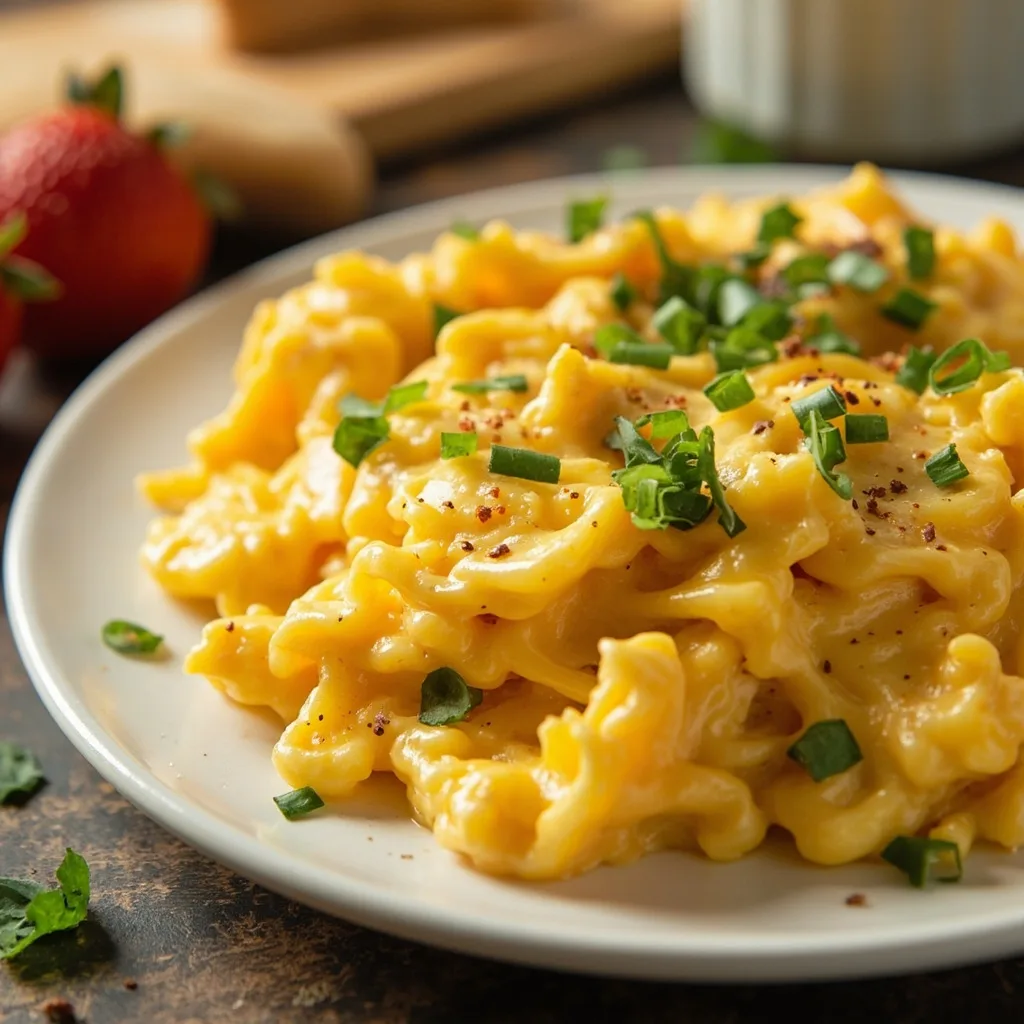
Simple, creamy scrambled eggs made with butter and a splash of milk.
Ingredients
- 4 large eggs
- 2 tablespoons whole milk or heavy cream (optional, for creaminess)
- Salt, to taste (about 1/4 teaspoon)
- Freshly ground black pepper, to taste
- 1 tablespoon unsalted butter
- 1 tablespoon chopped fresh chives or parsley (optional, for garnish)
Instructions
- Crack the eggs into a bowl. Add the milk or cream (if using), a pinch of salt and some black pepper. Whisk until the mixture is uniform and slightly frothy.
- Place a nonstick skillet over medium-low heat and add the butter. Swirl to coat the pan as the butter melts — don’t let it brown.
- Pour the egg mixture into the warm skillet. Let it sit undisturbed for 10–15 seconds so the edges begin to set.
- Using a silicone spatula, gently push the eggs from the edges toward the center, forming soft folds. Continue to move the eggs occasionally — cook slowly for tender curds.
- When the eggs are mostly set but still slightly glossy and a little underdone, remove the pan from the heat. Residual heat will finish them without overcooking.
- Give one final gentle stir, taste and adjust seasoning. Serve immediately, garnished with chopped chives or parsley if desired.
Nutrition Information
- Calories: 200 kcal (per serving)
- Cholesterol: 372 mg (per serving)
- Sodium: 300 mg (per serving, includes added salt)
- Carbohydrates: 1 g (per serving)
- Fiber: 0 g
- Sugar: 1 g (per serving)
- Protein: 12 g (per serving)