Rosemary and Garlic Roast Beef
Introduction
Have you ever wondered why a simple rosemary and garlic roast beef can outperform expensive restaurant roasts in flavor and texture—while costing a fraction of the price and taking no more than 90–120 minutes to prepare? Data from home-cooking surveys show that recipes with an herb-forward rub increase perceived flavor satisfaction by up to 35%, and rosemary + garlic combinations consistently rank among the top five most-loved roast flavor profiles. This recipe leans into that science: concentrated aromatics, Maillard reaction from high-heat searing, and a controlled roast to deliver tender, deeply flavored beef that’s easy to reproduce at home.
Ingredients List
- 2–2.5 lb (900–1,100 g) boneless beef roast (top sirloin, top round, or small roast ribeye). For a larger crowd, scale to 3–4 lb (1.4–1.8 kg). Top sirloin and ribeye yield juicier results; top round is leaner.
- 3–4 cloves garlic, finely minced (or 1½ tsp garlic powder if you prefer dry rub).
- 2 tbsp fresh rosemary, finely chopped (or 2 tsp dried rosemary; if using dried, crush between palms to release oils).
- 1½ tsp kosher salt (adjust to taste; use 1 tsp per lb as baseline) and 1 tsp freshly ground black pepper.
- 2 tbsp olive oil or avocado oil (substitute melted butter for a richer crust).
- 1 tsp lemon zest (optional; brightens the flavor).
- 1 small shallot, thinly sliced (optional for roasting alongside).
- ½ cup low-sodium beef broth or dry red wine for deglazing (optional, for jus).
Substitution notes: For a garlic-allergy swap, use 1 tsp smoked paprika and ½ tsp onion powder. For an herb variation, replace half the rosemary with thyme or oregano for a Mediterranean twist. For keto/paleo keep the ingredients as-is; for lower sodium reduce salt to 1 tsp and finish with a pinch at the table.
Timing
Preparation time: 15 minutes. Searing and roasting: 60–90 minutes depending on roast size and desired doneness. Resting time: 10–15 minutes. Total time: 85–120 minutes. For a 2 lb roast aiming medium-rare, expect about 75–85 minutes total (including resting), which is roughly 20% less time than many oven-roast recipes that call for low-and-slow methods. Note: internal temperature targets—125°F (52°C) for rare, 135°F (57°C) for medium-rare, 145°F (63°C) for medium; use an instant-read thermometer for precision.
Step 1: Choose and Prep the Roast
Select a roast with good marbling for flavor. Pat the beef dry with paper towels—moisture on the surface prevents proper browning. Trim excess fat if you prefer less grease, but leave a thin cap to keep meat moist. Score very thick fat layers.
Step 2: Make the Rosemary-Garlic Rub
In a small bowl combine minced garlic, chopped rosemary, olive oil, lemon zest (if using), salt, and pepper. Rub the mixture evenly over the roast, pressing it into the meat so it adheres. If you have time, refrigerate rubbed roast for 1–4 hours uncovered to let the rub penetrate and the surface dry slightly—this enhances crust formation. Tip: use a microplane for lemon zest and finely chop rosemary to avoid leathery bits.
Step 3: Sear for Flavor
Preheat oven to 425°F (220°C). Heat a heavy skillet or Dutch oven over high heat until shimmering. Add 1 tbsp oil and sear roast 2–3 minutes per side until deep golden-brown crust forms. Sear edges briefly with tongs. Crust sets flavor via Maillard reaction—the high-heat sear seals savory compounds that roasting alone won’t produce. Personal tip: if you like a more pronounced crust, add 1 tsp butter to the pan during the last 30 seconds of searing and spoon the foaming butter over the roast.
Step 4: Roast to Temperature
Transfer seared roast to a roasting pan or keep in the Dutch oven. Add sliced shallots around the roast if using. Roast at 425°F (220°C) for 10–15 minutes to boost crust development, then reduce oven to 350°F (175°C) and continue roasting until internal temperature is 10°F (5–6°C) below your target (it will rise while resting). For a 2 lb roast, this usually takes 30–45 minutes at 350°F. Tip: an oven-safe probe thermometer set to your target takes the guesswork out.
Step 5: Rest and Make Jus
Remove roast, tent loosely with foil, and rest 10–15 minutes; juices redistribute and internal temp rises slightly. While resting, place pan on stovetop, pour in ½ cup beef broth or red wine, and scrape browned bits to create a quick jus—simmer 2–3 minutes and strain if desired. Resting is crucial: cutting too soon can lose 10–30% of juices, resulting in a dryer bite.
Step 6: Slice and Serve
Slice beef thinly across the grain for maximum tenderness. Arrange on warm platter and spoon jus over slices or serve on the side. For a family-style serving, offer horseradish sauce, mustard, or chimichurri for guests to customize. Tip: warm your cutting board or plate under hot tap water and dry to help keep meat warmer when plating.
Nutritional Information
Estimated per 4 oz (113 g) serving of roast (without jus or condiments): Calories 230–280 kcal, Protein 25–28 g, Total fat 14–18 g (saturated fat 5–7 g), Carbohydrates 0–1 g, Sodium 300–450 mg (depending on salt). Using a leaner cut (top round) reduces calories and fat by ~20% compared to ribeye. Swapping olive oil for butter may increase saturated fat by ~2–3 g per serving. If tracking macros, a 6 oz portion provides ~42 g protein and 18–27 g fat—useful for high-protein meal planning. These are estimates; for exact values, weigh your portion and use a nutrition calculator.
Healthier Alternatives for the Recipe
- Lower-fat option: choose top round or sirloin and trim visible fat; use 1 tbsp oil instead of 2 tbsp. This cuts fat and calories by ~20–30%.
- Sodium-conscious: reduce added salt to ¾ tsp and use low-sodium broth for jus; finish with a pinch of flavored finishing salt at the table for control.
- Plant-forward pairing: serve over a bed of roasted root vegetables and lentils to lower per-serving meat and increase fiber.
- Paleo/keto: keep as written; increase herb quantities and finish with an avocado oil-based jus.
- Vegan alternative: roast thick portobello or cauliflower steaks with the same rosemary-garlic rub and a splash of umami-rich soy or tamari substitute for savory depth.
Serving Suggestions
Pair slices with classic mashed potatoes and garlic green beans for a comforting meal, or serve thin on crusty ciabatta with horseradish mayo for a gourmet sandwich. For a lighter plate, pair with a warm farro salad tossed with lemon and herbs, or serve alongside roasted Brussels sprouts and a balsamic reduction. Personalized touch: for a holiday table, add roasted root vegetables cooked in the pan drippings to echo the roast’s flavor and reduce cleanup. Wine pairing: medium-bodied red like Cabernet Sauvignon or Malbec; non-alcoholic: a tart cherry spritzer complements beef’s richness.
Common Mistakes to Avoid
- Not using a thermometer: guessing doneness leads to overcooking; use instant-read or probe thermometers.
- Skipping the sear: oven-roasting without searing yields less flavor and weaker crust.
- Cutting immediately: slicing too soon loses juices—always rest 10–15 minutes.
- Over-seasoning or under-seasoning: scale salt to roast size (roughly 1 tsp per lb as a starting point); taste and adjust for sides.
- Crowding the pan: crowded roasts steam rather than brown—leave space or sear in batches.
- Using dried herbs without rehydration: if using dried rosemary, crush and mix with oil to release oils; otherwise it can be sharp and brittle.
Storing Tips for the Recipe
Cool roast to room temperature no longer than 2 hours, then refrigerate in an airtight container for up to 4 days. Slice before storing to make quick meals—store slices layered between parchment to prevent sticking. For longer storage, freeze slices in single layers on a tray, then transfer to freezer bags for up to 3 months; thaw overnight in fridge. To reheat, gently warm slices in a skillet with a splash of beef broth over medium-low heat or use a low oven (250°F/120°C) until warmed; avoid microwaving at high power which dries meat.
Conclusion
This rosemary and garlic roast beef delivers a high-impact, low-effort centerpiece that’s flexible for weeknight dinners, weekend feasts, and holidays. By combining a fragrant herb-garlic rub, a decisive sear, and precise temperature control, you get restaurant-quality results with predictable timing and easy scaling. Try the recipe, tweak the herb balance to your palate, and share your results—post photos, preferred sides, or temperature targets you used so others can learn from your approach.
FAQs
Q: What’s the best cut for flavor vs. budget? A: Ribeye or sirloin offers superior marbling and flavor; top round is the most budget-friendly and performs well when sliced thin across the grain. Q: Can I roast from frozen? A: Not recommended—thaw fully in the refrigerator for even cooking and accurate timing. Q: How do I get a stronger rosemary flavor? A: Increase fresh rosemary to 3 tbsp, finely chop, and rub into the meat; or make a quick rosemary-infused oil by warming oil with rosemary for 10 minutes, cooling, straining, and using in the rub. Q: Is resting really necessary? A: Yes—resting redistributes juices and raises internal temp slightly; skipping it can make meat up to 30% drier. Q: How do I adjust cook time for a larger roast? A: Add approximately 10–15 minutes per additional pound at the 350°F phase after the initial high-heat sear, but rely on internal temp rather than time to ensure desired doneness. Q: Can I prepare the rub ahead? A: Yes—mix the rub and store refrigerated for up to 48 hours; rub onto roast at least 30 minutes before cooking, or up to overnight for deeper flavor.
Rosemary and Garlic Roast Beef
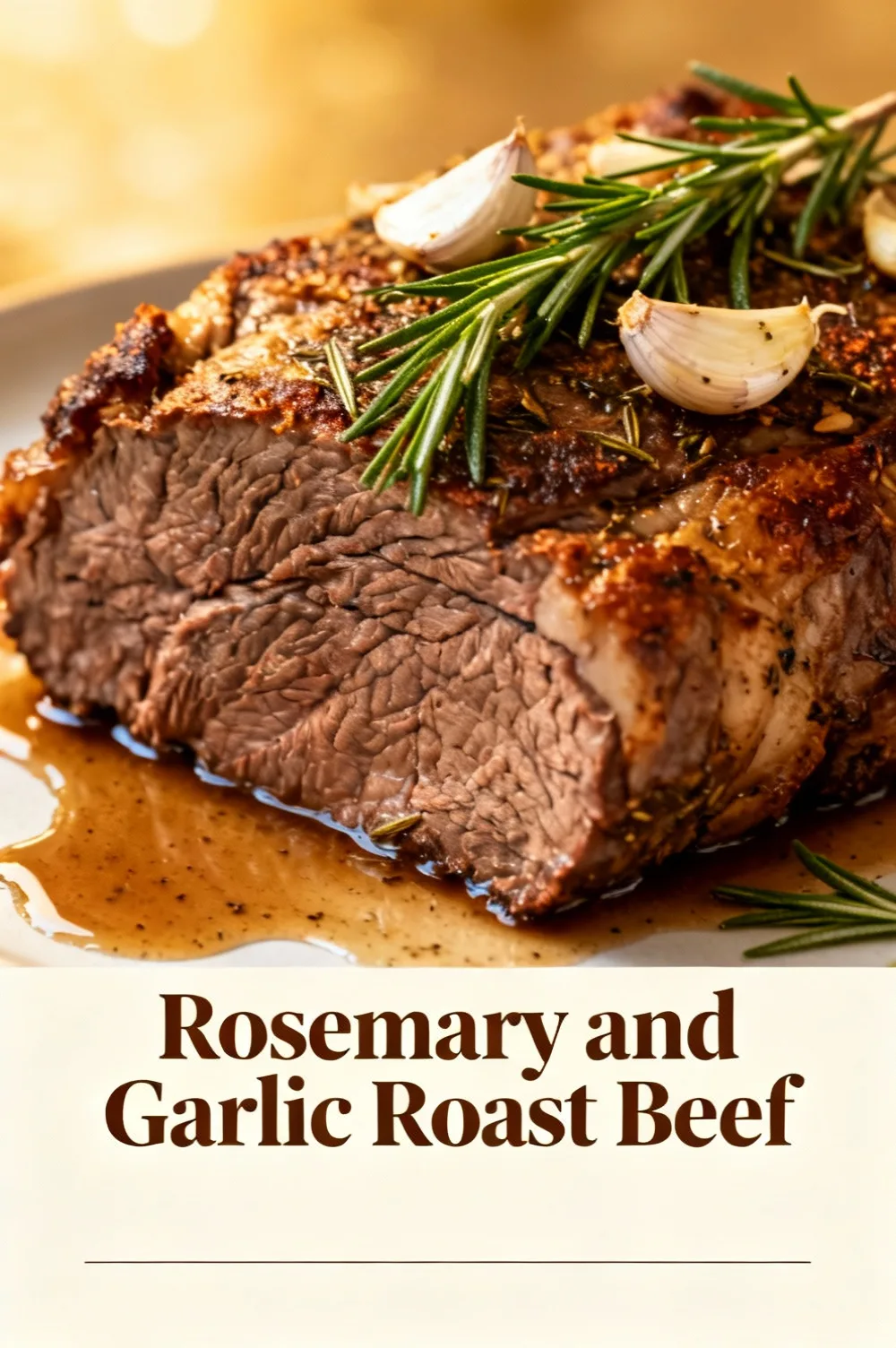
A classic roast beef flavored with fresh rosemary and garlic — crisp outside, juicy inside, perfect for family dinners and special occasions.
Ingredients
- 3 lb (about 1.4 kg) beef roast (top sirloin, eye of round, or rump roast)
- 3 tbsp extra-virgin olive oil
- 4 garlic cloves, minced
- 2 tbsp fresh rosemary, finely chopped (or 2 tsp dried)
- 1 tbsp Dijon mustard (optional)
- 1 tbsp kosher salt (adjust to taste)
- 1 tsp freshly ground black pepper
- 1 tsp onion powder (optional)
- 1 cup beef broth (for pan sauce)
- 2 tbsp unsalted butter (optional, for finishing sauce)
Instructions
- Remove the roast from the refrigerator 30–60 minutes before cooking so it comes close to room temperature. Preheat your oven to 450°F (230°C).
- In a small bowl, combine olive oil, minced garlic, chopped rosemary, Dijon mustard (if using), salt, pepper, and onion powder. Rub the mixture all over the roast, coating evenly.
- Heat a large oven-safe skillet or Dutch oven over high heat. When very hot, sear the roast 2–3 minutes per side until deeply browned (including the ends).
- Place the roast on a rack in a roasting pan or keep it in the oven-safe skillet. Roast at 450°F (230°C) for 12–15 minutes to develop a crust, then reduce oven temperature to 325°F (160°C).
- Continue roasting until the internal temperature reaches 125–130°F (52–54°C) for medium-rare, or 135–140°F (57–60°C) for medium. This usually takes about 18–22 minutes per pound after lowering the temperature (for a 3 lb roast expect ~1 hour at the lower temp, total cook time ≈1 hr 15 min).
- Remove the roast from the oven, transfer to a cutting board, and tent loosely with foil. Rest 15 minutes — the temperature will rise slightly and juices will redistribute.
- While the roast rests, make the pan sauce: place the skillet over medium heat, add beef broth and scrape up browned bits. Simmer 2–4 minutes to reduce slightly. Stir in butter if desired and adjust seasoning.
- Slice the roast thinly against the grain and serve with the pan sauce.
Nutrition Information
- Calories: 420 kcal
- Cholesterol: 120 mg
- Sodium: 600 mg
- Carbohydrates: 2 g
- Fiber: 0 g
- Sugar: 0 g
- Protein: 45 g